

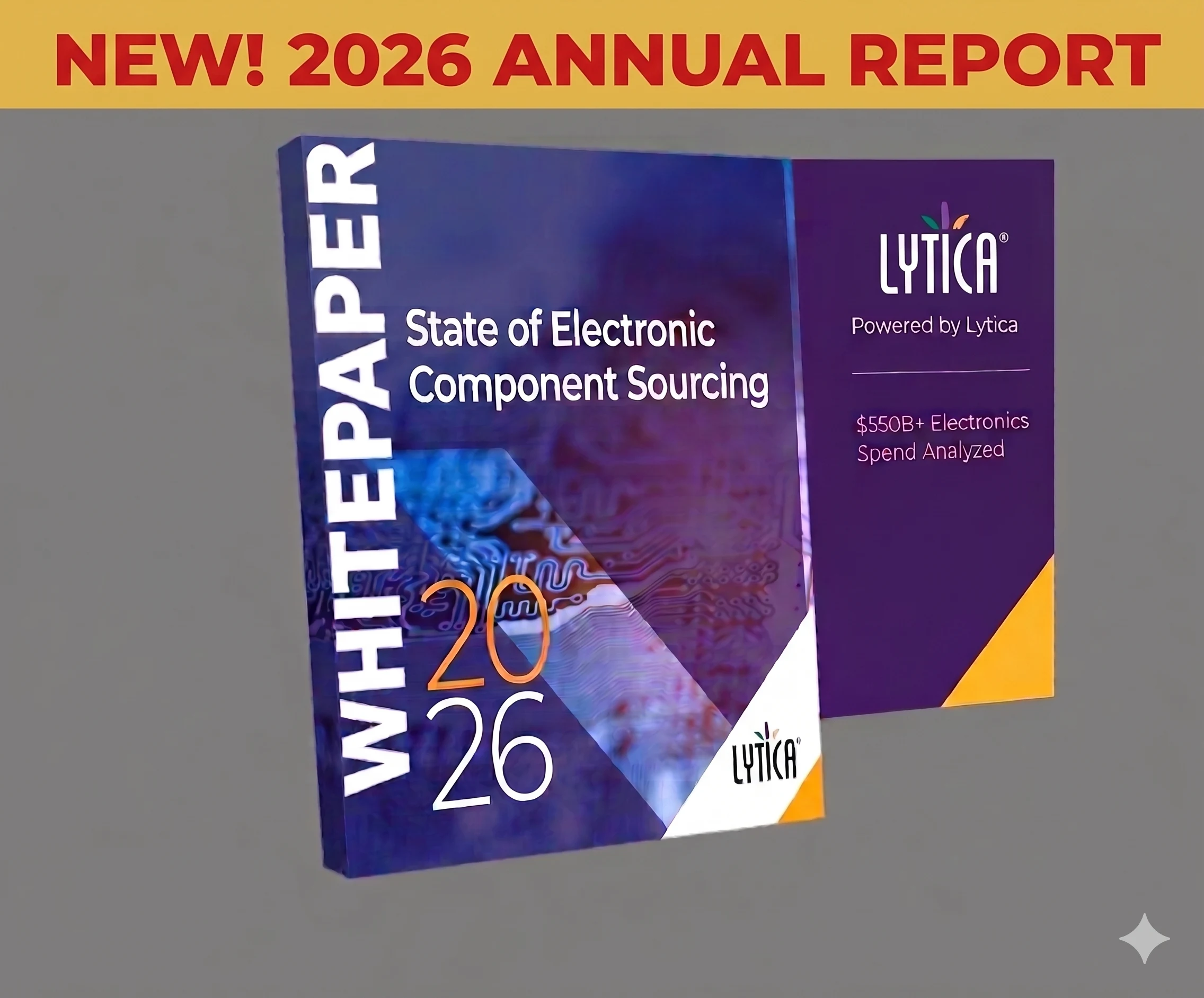
The 2026 State of Electronic Component Sourcing
This report combines 2025 market retrospectives with forward-looking forecasts and practical scenarios to help procurement leaders navigate sourcing challenges.
Explore Lytica's research and expert insights to help electronic component procurement leaders balance cost, risk, and business performance in an evolving landscape.
This report combines 2025 market retrospectives with forward-looking forecasts and practical scenarios to help procurement leaders navigate sourcing challenges.

Examines how global supply chains have historically optimized for cost alone under stable geopolitical conditions and predictable logistics.
Addresses how supply chains were designed around cost optimization during periods of stability and predictable logistics patterns.

Explores how digital platforms and real market data enable supply chain companies to improve efficiency and strengthen negotiating power.

Identifies three strategic questions every executive overseeing sourcing and procurement should be able to answer.

Reveals what drives electronic component pricing, why transparency remains limited, and how market data supports better savings negotiations.
Survival guide addressing industry shortages from pandemic impacts, factory incidents, natural disasters, and workforce disruptions with mitigation strategies.
Examines how merged companies can realize cost savings through supply chain consolidation and related implementation challenges.
Details Lytica's methodology for giving OEM, ODM, and EMS professionals accurate market pricing information for electronic components.

Guide for building and managing a responsive, sustainable global electronics supply base using technology optimization.
Addresses 2025 procurement challenges from geopolitical tensions and volatility, providing strategies for competitiveness and resilience.

Learn how to respond to unexpected delivery delays and build a more resilient electronic component supply chain.
Growing volatility across the electronics supply chain is exposing the limitations of traditional procurement practices built on historical data and lagging indicators. Organizations that leverage market intelligence, predictive risk signals, and real-time pricing insights will be better positioned to manage cost, supply continuity, and competitive performance in an increasingly uncertain sourcing environment.